PubMatic’s Resource Hub
Building for the new search engines
When buyers started asking AI instead of Google, PubMatic's content needed to be findable by machines as much as people — so we rebuilt the infrastructure from the ground up, and the results are already showing up in Claude and Gemini unprompted.
Objective
PubMatic's website had the content — what it needed was the infrastructure to surface it. The way buyers, journalists, analysts, and AI agents discover information is changing fast: ChatGPT, Perplexity, and Google AI Overviews are increasingly the first stop, well before a search results page. Lead generation, brand authority, sales enablement — all of it depends on the right content reaching the right person at the right moment, through whatever channel they're using to look. This was the infrastructure build to make that possible.
Strategy
One Home for All Content, Structured for AI Discovery
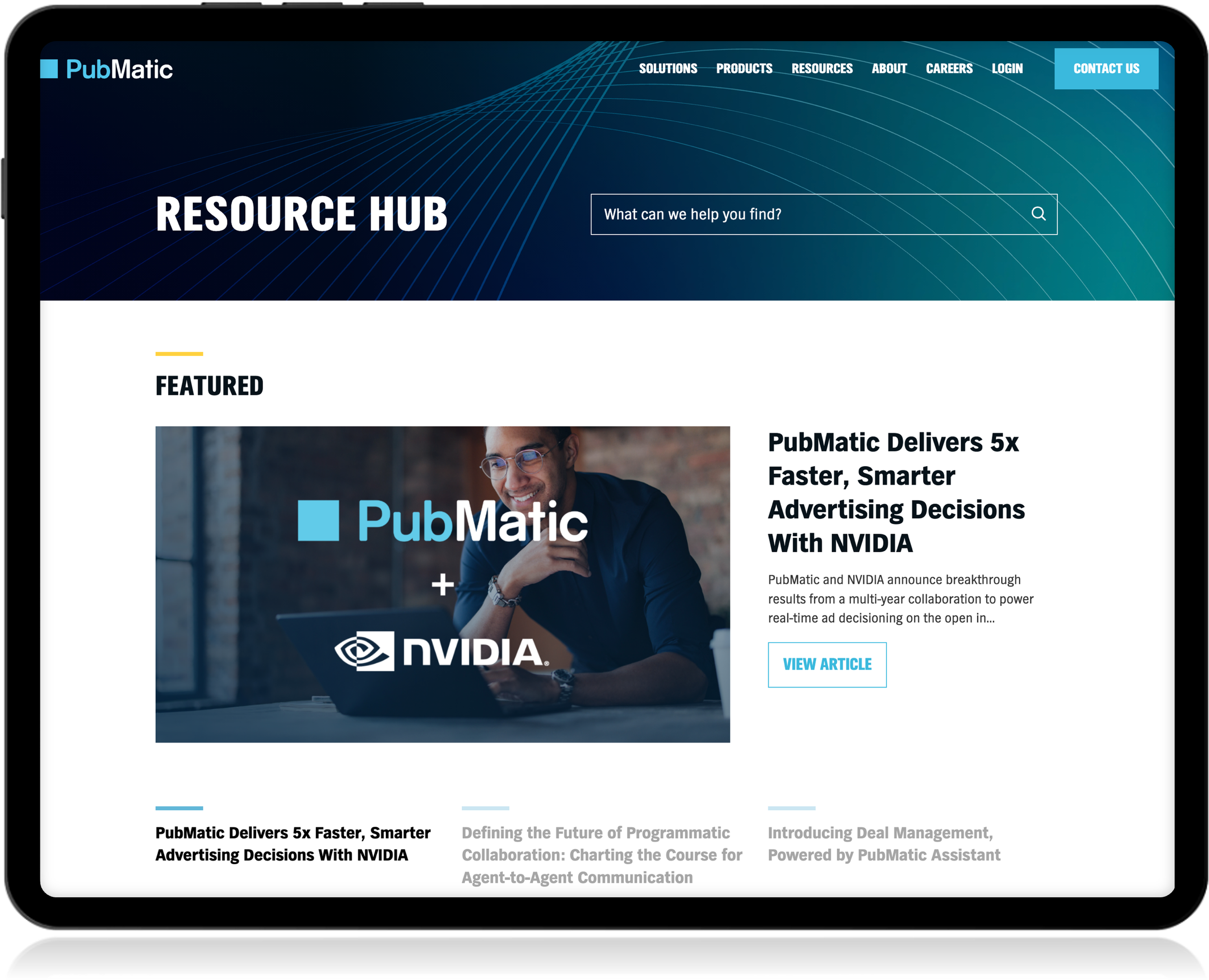
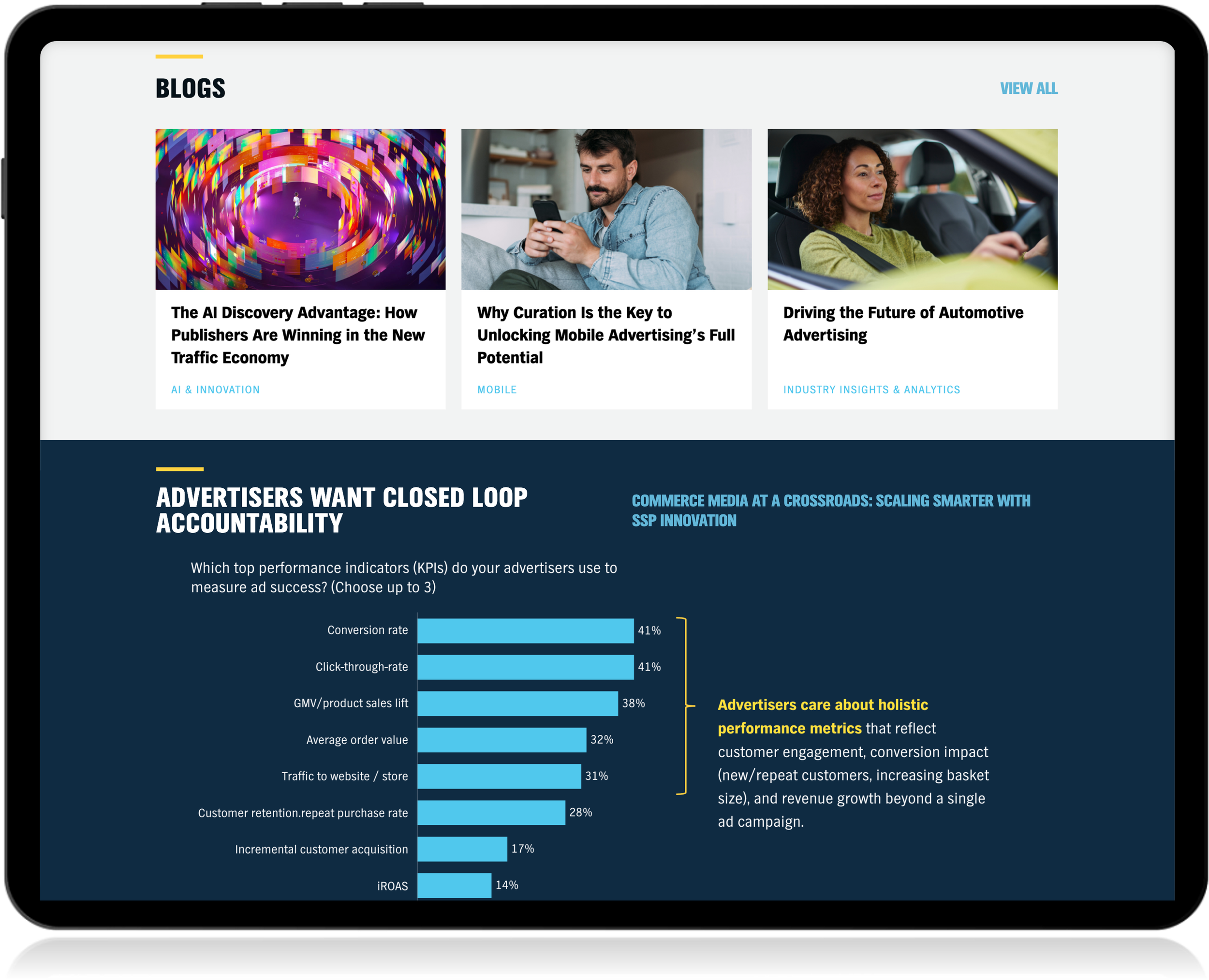
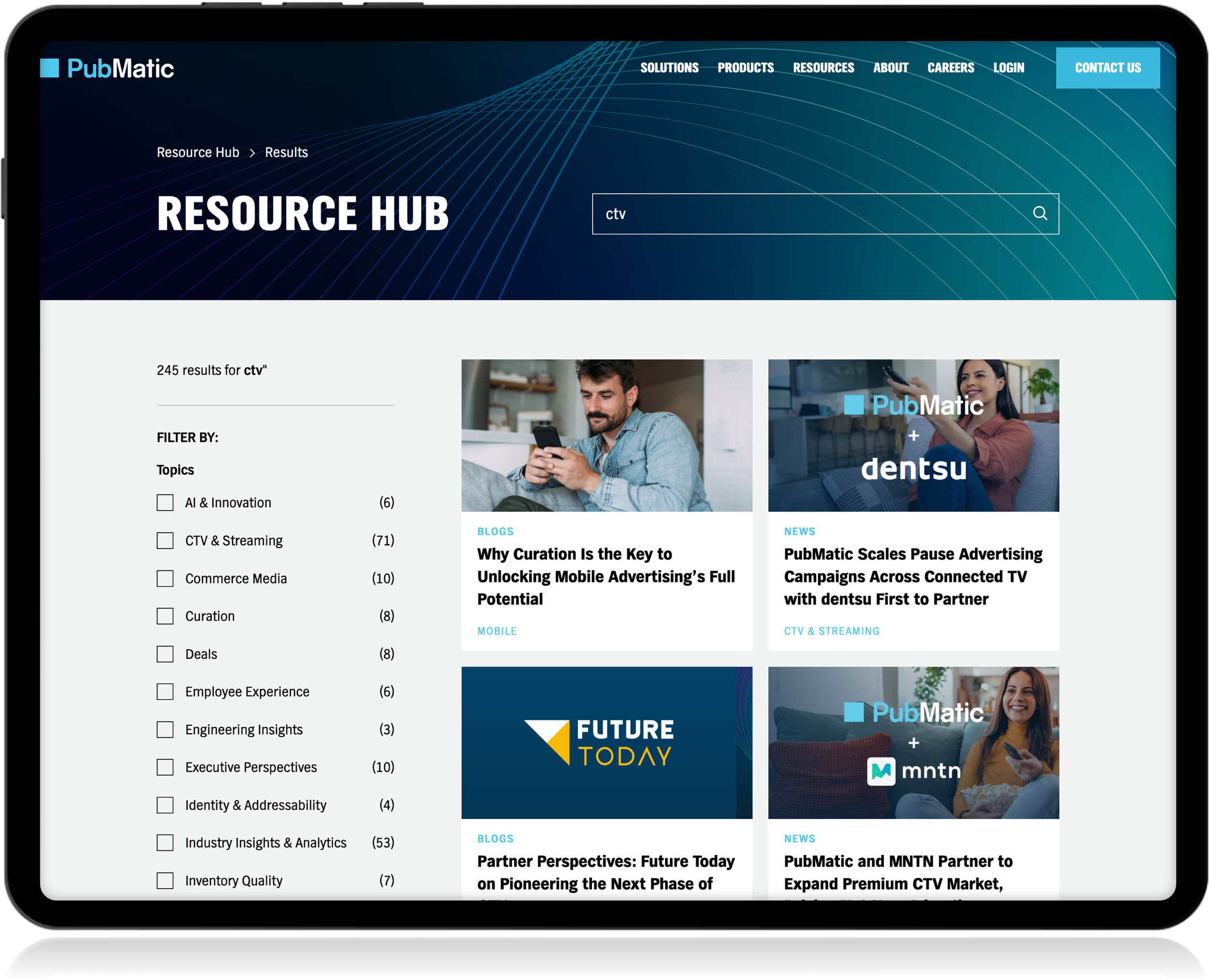
The foundation was a unified, searchable hub where every content type — case studies, blog posts, reports, infographics, news — is tagged, categorized, and filterable in one place. The architecture was built for AI-powered search engines alongside human navigation: advanced schema markup and structured data ensure every piece of content is indexed and readable by AI crawlers, making PubMatic's owned content eligible to surface in AI-generated responses across ChatGPT, Perplexity, and Google AI Overviews. Content that already existed could finally be found — by anyone, or anything, doing the looking.
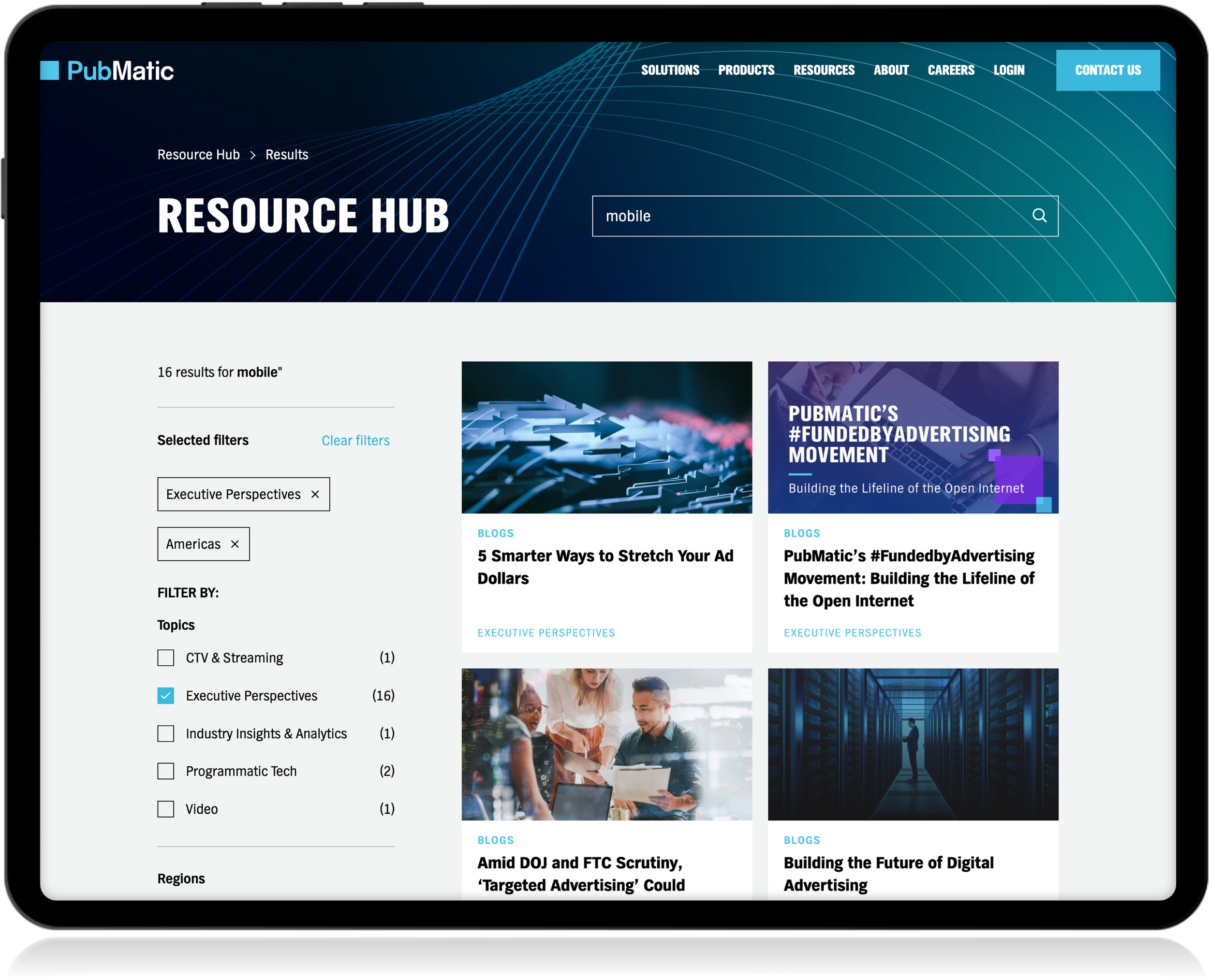
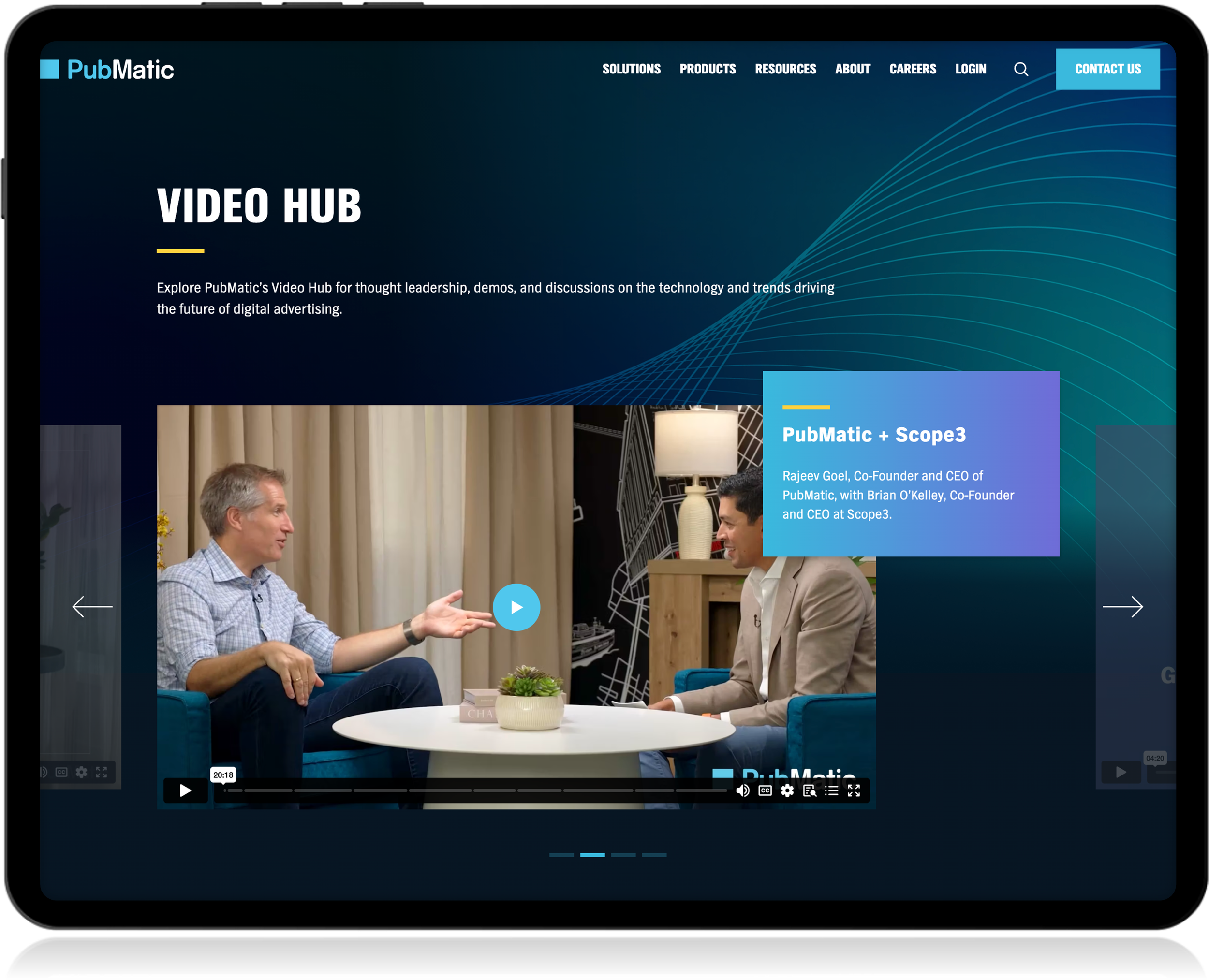
Video Hub — A Structured, Scalable Video Library
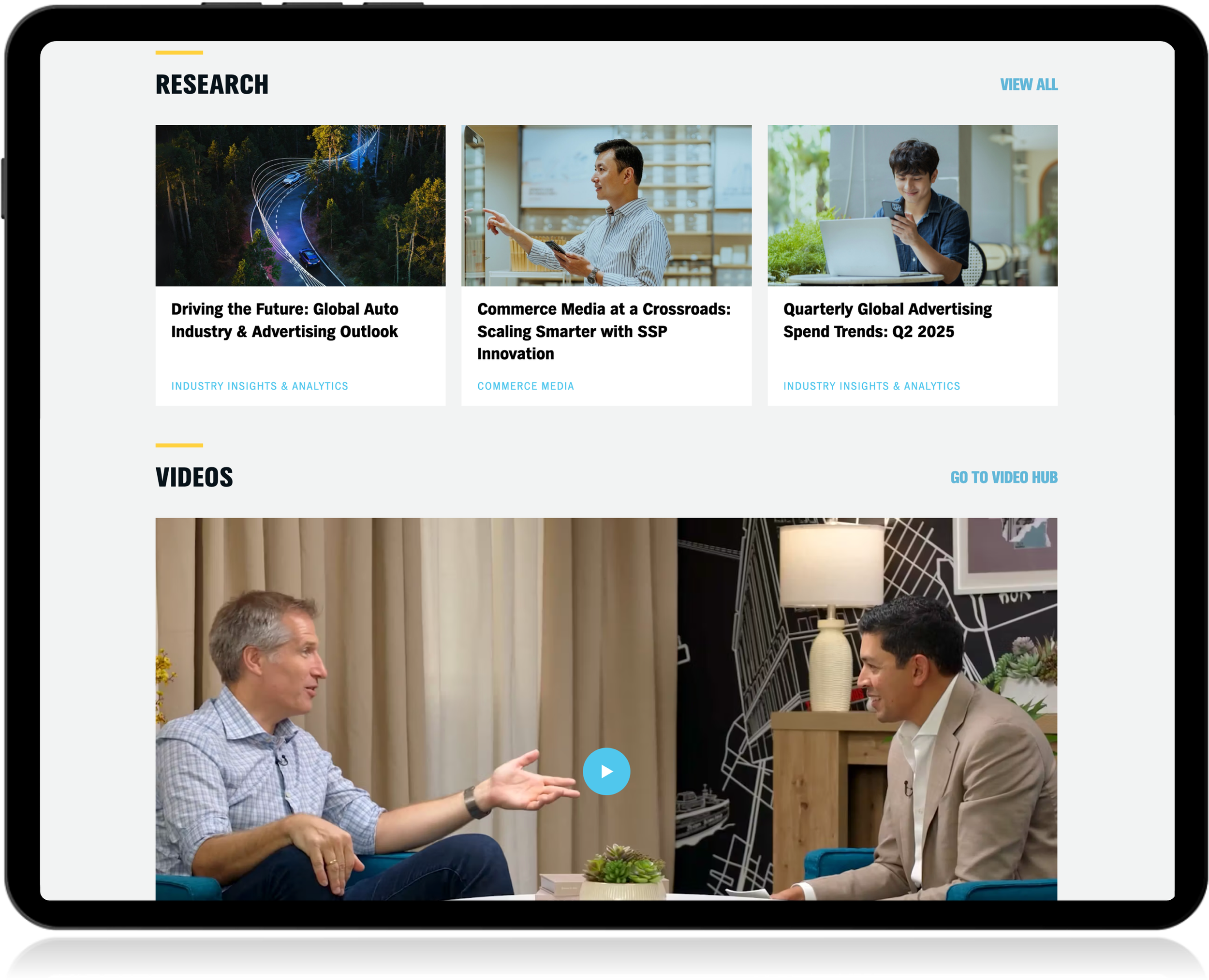
PubMatic's video content had outgrown its original home that was more placeholder than destination. The Video Hub gave it structure: a dedicated library segmented into Executive Dialogues, Demos, PubMatic Moments, and Explainer Videos, with featured placements and filtering so visitors can navigate without hunting. As AI demo content continues to grow, the Video Hub serves as the primary destination, directly interconnected with the AI Hub — part of a content ecosystem designed to scale alongside the product story.
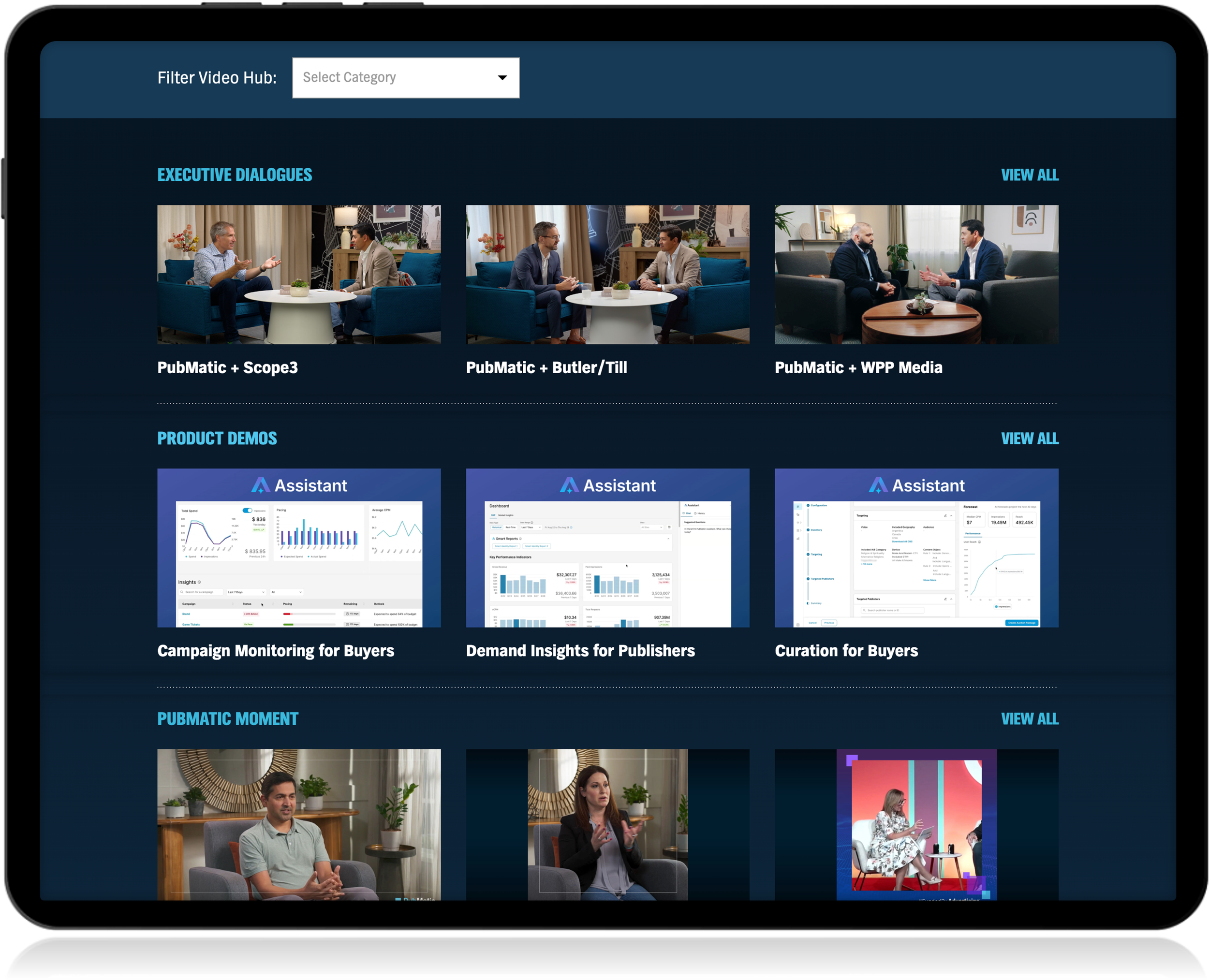
Interactive Demos — Self-Serve Product Discovery, 24/7
The third workstream converted AI demo videos into interactive, self-guided product tours built around a mini tour library concept. Buyers increasingly expect to self-educate before ever talking to sales, and a process that depends entirely on live demo scheduling is a liability in that environment. Navattic removes the dependency — giving buyers a multilingual, self-guided way to explore PubMatic's AI capabilities on their own terms, at their own pace, from anywhere in the world.
AEO/GEO-Ready Infrastructure — Built for the Next Era of Search
Answer Engine Optimization and Generative Engine Optimization are present considerations, not future ones. PubMatic's content infrastructure was rebuilt accordingly: structured data and advanced tagging across all content types, HTML infographics that AI engines can actually read and reference, and a content architecture that makes PubMatic's points of view citable rather than merely discoverable. The goal is for PubMatic to surface when an AI engine is asked about programmatic advertising, SPO, or agentic advertising — any category where PubMatic has a legitimate claim to expertise — and the infrastructure is now in place to compete there.
UX Design
Intentional UX runs through all three workstreams — embedded as a structural decision from the start, not applied as a finishing layer.
Navigation was designed with clear entry points per section so visitors can orient immediately rather than scroll linearly. A Growth Engine assessment surfaced specific gaps across Solutions pages: missing primary CTAs above the fold, underutilized persona-specific gating, and conversion paths longer than they needed to be. Resource Hub addressed all of it — shorter content paths, clearer next steps after downloads, and smarter routing throughout. The Video Hub UI uses featured placements and category segmentation so visitors can self-select quickly. Interactive tours were designed as guided, choose-your-own-adventure flows, giving users a way to explore features relevant to their role without cognitive overload.
Impact
Content platform live and scaling: Resource Hub launched May 2025 with FAQs, full content categorization, and structured data — giving PubMatic a unified, AI-ready content destination for the first time, built to grow with the volume and variety of content the team produces. Consolidating PubMatic's entire video library into a browsable, filterable experience in the new Video Hub turned un-catalogued content into a purposeful and scalable destination.
Self-serve AI discovery: Interactive tours let prospects explore PubMatic's AI capabilities on demand, at any hour, in any language, without waiting on a live demo to move forward in the buyer journey.
A feedback loop: Analytics tracking across web traffic, top-20 content, search keywords, and landing pages creates ongoing visibility into what's working, and a clear signal for what to build and optimize next.
Positioned for AI search, not just Google: AEO and GEO-ready infrastructure puts PubMatic in a position to surface in LLM responses organically. PubMatic now surfaces as a top result for "Auction packages in advertising" in Claude, "Who is leading agentic in adtech" and "Agentic in programmatic advertising" in Gemini. That's a direct result of the structural work: logical heading hierarchy, Schema markup, consistent content production, and an architecture built for machine readability from the ground up. Earlier in this portfolio, an IPG client querying Claude was served PubMatic and AgenticOS unprompted. The infrastructure is doing exactly what it was built to do.
